Program
NCA 2026 – The 24th IEEE International Symposium on Network Computing and Applications
November 10–13, 2026 · Ortigia-Syracuse (Sicily), Italy
The NCA 2026 technical program is organized by conference date. Select a date to view the corresponding timetable. Workshop titles link to workshop websites; keynote talks and NCA sessions link to their details further down the selected day. Rooms are shown as Sala B and Sala A, following the official program.
Venue: Siracusa Urban Center – Congress Venue, Via Nino Bixio 1, Siracusa (Sicily), Italy.
Select a conference date to view its program.
Tuesday, November 10, 2026
| Time | Sala B | Sala A |
|---|---|---|
| 08:00–09:00 | Registration | |
| 09:00–10:30 | NetAI 2026 | AiDDRESS-MED |
| 10:30–11:00 | Coffee Break | |
| 11:00–12:30 | NetAI 2026 | AiDDRESS-MED |
| 12:30–13:30 | Light Lunch | |
| 13:30–15:00 | ContinuumOps | DETECT |
| 15:00–15:30 | Coffee Break | |
| 15:30–17:00 | ContinuumOps | DETECT |
| 19:00–21:30 | Welcome Cocktail | |
Wednesday, November 11, 2026
| Time | Sala B | Sala A |
|---|---|---|
| 08:00–09:00 | Registration | |
| 09:00–09:30 | Opening | |
| 09:30–10:30 | Keynote: Andrea Passarella | |
| 10:30–11:00 | Coffee Break | |
| 11:00–12:30 | Session 1: Network Protocols, Configuration & Management | |
| 12:30–13:30 | Light Lunch | Demo + Poster Session |
| 13:30–15:00 | Session 2: Federated & Distributed Learning at the Edge | |
| 15:00–15:30 | Coffee Break | |
| 15:30–17:00 | Session 3: Cloud-Edge Resource Management & Scheduling | PhD Forum |
| 17:00–18:30 | Group 1 – Pupi | Group 2 – Train |
| 18:30–20:00 | Group 1 – Train | Group 2 – Pupi |
Keynote 1 – Dr. Andrea Passarella
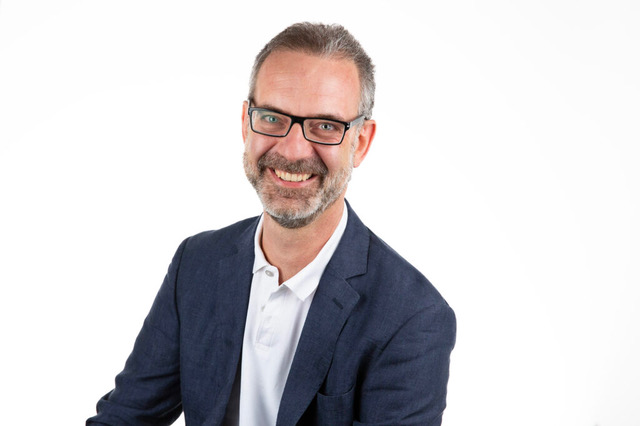
Decentralised learning for physical AI: coordination, efficiency and robustness
Dr. Andrea Passarella
IIT-CNR, Italy
Abstract
After advances in AI systems that interpret data and generate content, physical AI offers a possible next wave: intelligent systems that perceive, learn and act in the physical world. Supporting these systems will require intelligence close to where data are generated and actions take place, often across devices with limited resources and intermittent connectivity. Distributed and decentralised learning can help meet these requirements while keeping data local.
This keynote explores how devices can learn collaboratively without a central coordinator. Drawing on our research on decentralised federated learning and federated clustering, I will discuss how local interactions can support learning across heterogeneous data and independently trained models, including settings where labels and the underlying data distributions are unknown. I will then examine the trade-offs between learning performance and resource costs, connecting neural network pruning during training with the placement of analytics across edge and fog infrastructures, and with the constraints imposed by mobility and limited bandwidth.
The talk will also examine robustness to corrupted data, node failures and the loss of data sources, discussing when decentralised averaging can contain the effects of poor data and preserve previously acquired knowledge. Finally, I will explore how network topology shapes the spread of knowledge, showing how hubs, peripheral nodes and community boundaries affect collective learning. These findings inform the design of decentralised learning systems for physical AI.
Biography
Andrea Passarella (Ph.D 2005) is a Research Director of the National Research Council of Italy (CNR) and the Director of the Institute of Informatics and Telematics of CNR (IIT). Prior to joining IIT he was with the Computer Laboratory of the University of Cambridge, UK. He has published 260+ papers on decentralised AI, Online and Mobile social networks, Next Generation Internet, opportunistic, ad hoc and sensor networks, receiving the best paper award at IFIP Networking 2011 and IEEE WoWMoM 2013, among others. He is the founding Associate Editor-in-Chief of Elsevier Online Social Networks. He was the chair of the IFIP WG 6.3 "Performance of Communication Systems". He was and is involved in several expert groups for EU programmes. He is currently the national coordinator of the SLICES Research Infrastructure. He is/was CNR (co-)PI for several research and innovation projects in the areas of Human-centric AI, BigData, FET Proactive, Future Internet, FIRE, FoF, Smart Cities, EIT Digital.
↑ Back to programSession 1: Network Protocols, Configuration & Management
Session chair: Giovanni Merlino, University of Messina, Italy
Session 2: Federated & Distributed Learning at the Edge
Session chair: Stefano Secci, Cnam, France
Session 3: Cloud-Edge Resource Management & Scheduling
Session chair: Francesco Gargiulo, ICAR-CNR, Italy
PhD Forum
Session chair: Luca D'Agati, University of Messina, Italy
Demo + Poster Session
Thursday, November 12, 2026
| Time | Sala B | Sala A |
|---|---|---|
| 08:30–09:00 | Registration | |
| 09:00–10:00 | Keynote: Serge Fdida | |
| 10:00–10:30 | Coffee Break | |
| 10:30–12:30 | Industry Track | STiNCA |
| 12:30–13:30 | Light Lunch | |
| 13:30–15:00 | Session 4: Blockchain, Decentralized Trust & Identity | AI-SecureCom |
| 15:00–15:30 | Coffee Break | |
| 15:30–17:00 | Session 5: High-Performance & Emerging Computing Systems | AI-SecureCom |
| 17:00–19:00 | Guided Tour of Ortigia | |
| 20:00–23:30 | Social Gala Dinner | |
Keynote 2 – Prof. Serge Fdida
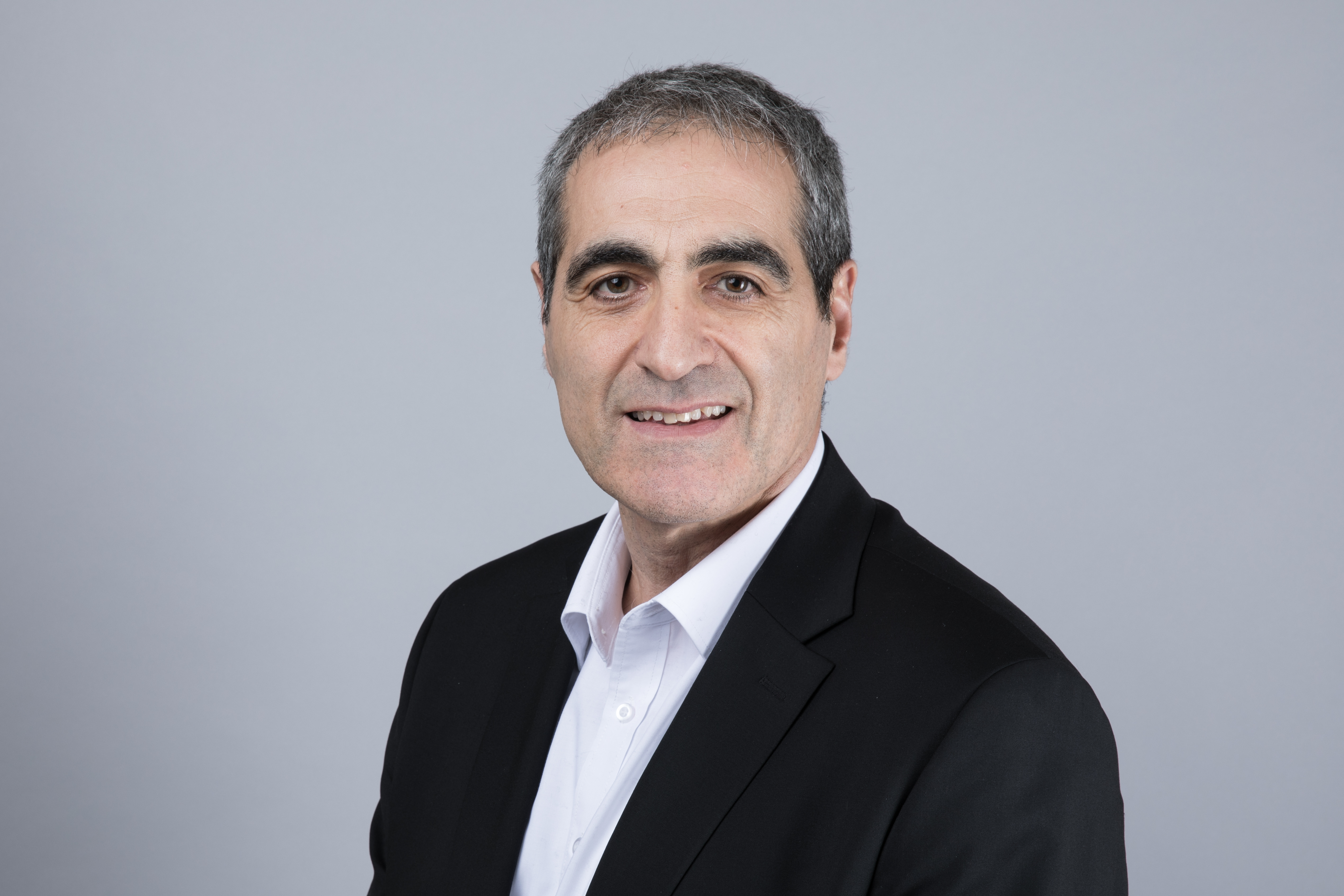
awaiting supplied image
SLICES-RI: Towards AI-Assisted Experimental Research for Beyond-5G and 6G Networks
Prof. Serge Fdida
Sorbonne Université, France
Abstract
The scientific community working on next-generation networks and systems faces a growing challenge: the lack of advanced, sustainable, and open scientific instruments capable of supporting experimental validation, accelerating discovery through data sharing, and ensuring reproducibility. The rapid growth of scientific production, increasingly driven by data-intensive methodologies and the adoption of AI/ML, further reinforces the need for a new approach to experimental research.
SLICES-RI is pioneering this transformation as the first large-scale scientific instrument dedicated to digital sciences included in the European ESFRI roadmap. Designed to support the complete experimental research lifecycle, SLICES-RI enables researchers to move from scientific ideas to reproducible experiments through standardized experimental Blueprints. Its Metadata Registry System (MRS) provides the foundations for sharing experimental knowledge and supporting repeatability.
Scientific instruments have always played a critical role in advancing research by providing access to sophisticated experimental capabilities through well-defined interfaces and access policies. However, the emergence of AI is poised to transform scientific methodologies, and SLICES-RI is exploring the concept of an AI-Assistant, aimed at transforming how scientists interact with complex research infrastructures. By combining domain-specific knowledge, large language models, and agentic AI, this assistant could help researchers translate scientific intent into executable experimental workflows, identify and configure appropriate resources, orchestrate experiments, and support the analysis and interpretation of results. Beyond simplifying infrastructure access, the ambition is to investigate how AI can contribute to the scientific process itself, enabling researchers to investigate more assumptions and solutions.
This talk will introduce the SLICES-RI scientific instrument, with particular attention to the Beyond-5G/6G Blueprint, the MRS, and the emerging architecture of an AI-Assistant combining LLMs, agentic orchestration, and MLOps to support a new generation of experimental research in digital sciences.
Keywords
Research infrastructure, open research data, network foundation models, reproducibility, 6G, RAN technologies, AI-supported experimentation.
Biography
Serge Fdida is a Professor at Sorbonne Université, Paris, France, a member of the French Academy of Technology, an IEEE Fellow, and an ACM SIGCOMM Distinguished Scientist. He has led numerous European research initiatives, pioneering federated Internet testbeds through PlanetLab Europe, OneLab, and FIT. He played a leading role in establishing SLICES-RI, a large-scale research infrastructure for digital sciences included in the European ESFRI Roadmap in 2021. He was among the initiators of the ACM CoNEXT conference and served as General Chair of ACM MobiCom 2015 and IEEE INFOCOM 2019. His contributions extend beyond research to innovation, entrepreneurship, and academic leadership, including co-founding Qosmos and Hopcast and serving as Vice-President for International Development at Sorbonne Université.
↑ Back to programIndustry Track
Session chair: Giovanni Frattini, Meditech, Italy
Session 4: Blockchain, Decentralized Trust & Identity
Session chair: Miguel Correia, University of Lisboa, Portugal
Session 5: High-Performance & Emerging Computing Systems
Session chair: Adel Ben Mnaouer, University of Prince Mugrin, Saudi Arabia
Friday, November 13, 2026
| Time | Sala B | Sala A |
|---|---|---|
| 08:30–09:00 | Registration | |
| 09:00–10:30 | Session 6: Network Traffic Analysis, Engineering & Security | ICON 2026 |
| 10:30–11:00 | Coffee Break | |
| 11:00–12:30 | Session 7: Intelligent Cyber-Physical, Energy & IoT Systems | ICON 2026 |
| 12:30–13:30 | Light Lunch | |
| 13:30–14:30 | Keynote: Lance Fiondella | |
| 14:30–16:00 | Session 8: Wireless, IoT & V2X Networking | GreenNet-AI 2026 |
| 16:00–16:30 | Coffee Break | |
| 16:30–18:00 | Session 9: Security, Intrusion Detection & Threat Intelligence | |
| 18:00–18:15 | Closing Remarks | |
Keynote 3 – Lance Fiondella
A Mathematical Theory of Resilience
Lance Fiondella
University of Massachusetts Dartmouth, USA
Abstract
This talk will present recent research on quantitative modeling to predict resilience, including past studies that inspired the work, a formal definition of resilience, and mathematical framework. A summary of recent efforts, selected results, and the significance of these results to quantitative resilience systems engineering will be provided. Future modeling and applications will also be discussed.
Biography
Lance Fiondella is a professor in the Department of Electrical & Computer Engineering at the University of Massachusetts Dartmouth and the Founding Director of the University of Massachusetts Dartmouth Cybersecurity Center. He received his PhD in Computer Science & Engineering from the University of Connecticut in 2012.
↑ Back to programSession 6: Network Traffic Analysis, Engineering & Security
Session chair: Petrica Pop Sitar, Technical University of Cluj-Napoca, Romania
Session 7: Intelligent Cyber-Physical, Energy & IoT Systems
Session chair: Krishna Kant, Temple University, USA
Session 8: Wireless, IoT & V2X Networking
Session chair: Riccardo Lancellotti, University of Modena and Reggio Emilia, Italy
Session 9: Security, Intrusion Detection & Threat Intelligence
Session chair: Francesco Longo, University of Messina, Italy
Siracusa Urban Center – Congress Venue
Via Nino Bixio 1, 96100 Siracusa (SR), Sicily, Italy
Last update: November 8th, 2026